Posts mit dem Label newman werden angezeigt. Alle Posts anzeigen

Freitag, 20. Juni 2014

To study or to learn a language

With my first year as a language college student coming to an end I'd like to write a little more personal blog post to reflect on how I experienced learning a new language, as well as to what I mean by to “learn” and to “study” a language and tell you a little about my linguistic background.
So far in my life I have “studied” and also “learned” a language. By studying a language I basically mean what we do in College or school. We learn vocabulary but also especially the grammatical system behind a language and its rules for conjugation, declination, tenses whatsoever. By learning a language I mean the “sponge” method. You don't study a language's rules and grammar, you learn some words yes, but you mainly learn to speak and especially to understand the language by being around people who speak it, being exposed to it, incorporating it into your life.
Studying a language is more tiring, it takes longer and is boring once you get on a high level as grammar and syntax get more complex. Learning a language is easier, you often do it unconsciously, only have to study little, but you don't know why you apply certain words and suffixes . Now what is the better way to do it? I myself only “studied” two languages, Croatian and Spanish. Although I had English in school since the age of 11(not counting elementary, because come one lets be serious this was just as useful as the french classes I had in elementary) I don't consider it a language I have studied. Why so? The first four years of English in school were a complete mess. Soon after the first semester started our teacher left the school for some months and was only to return every now and then. While she was gone we had a variety of other teachers who never knew which level we are on and so on. So yes in these critic four years which I suppose are important when learning a new language especially when its the first foreign language you learn were not very satisfying. It was already back then that I was very fond of the English language and American culture, and I wanted to be a part of it by knowing their language better than my middle school classmates. So when I was 13 I started to intentionally expose myself to the English language. I read lots of articles and books in English, I tried to watch English movies even if I didn't understand a lot. It was especially the everyday and slang language I wanted to get to know so I would remember these things from movies and so on and use them. By the time I transferred to another school where we received a decent education in English language I found that I had it easier than most of my fellow students and didn't have to study for the tests. So although my first years of English were chaotic I think I mastered this language without school. When I speak it today it comes natural to me, I don't think of what to say or write and although I still have to look up certain words ( especially specialist terms) I consider myself fluent.
Currently I'm doing both, I'm studying a language (Croatian and now also English) at college and I'm learning one with the sponge method, which I'd like to compare now. In not even one year we learned a lot in Croatian. I am able to communicate in everyday situations and to produce new sentences I have not learned by heart, but the way there was not easy. It involved a lot of studying vocabulary and grammar as well as text production.
Now with my girlfriend coming from a bilingual family (raised in Greek and Albanian) I find myself exposed to a multilingual environment everyday. I started to learn Albanian some time ago and being around this language speeds up the process(I haven't studied a word since I started Croatian and yet I keep improving). Whether it's her talking to her family, Albanian facebook statuses or songs, with time you remember certain words phrases and structures that enable you to produce language without a clue about grammar like cases and conjugation. Then again most of our communication happens in English. As she is the person I talk to most this makes English the dominant language in my life, it's our home language if you want to call it that way for one and a half year now. English playing such a big role in my life has helped me a lot to improve my language skills as it doesn’t allow me to neglect it and that helps a lot, also for school.
So why study a language? Why wasting your time learning rules and grammar? Well if you want to professionally work with a language you have to know these systems. Since I learned English by doing I have no idea about its grammar. When I have a grammar test I just write what my gut tells me to. If my teachers would give me a sentence to transform into this and that tense (we all know the nice complicated names some English tenses have) I would have no idea which tense they might mean. This is something you have to know as a professional Interpreter and or translator. So I guess it always depends on what you want to do with language. If you simply want to be able to speak and understand it regardless of knowing the system behind it the easier way is to “learn” it. If you want to work with it professional you have to “study” it. So what's the best thing to do now? I guess first you should try the sponge method and then start to study why you do certain things the way you are doing them. I personally enjoy the multilingual environment I'm currently in and hope to gain as much from it as possible. Also I'm looking forward to the next semester since I'm planning to start yet another language.

Sonntag, 15. Juni 2014

Culture days

The upcoming week we are finally having the Culture days at College, and I managed to make up my mind on which presentations I want to attend. As for my “homeculture” I picked The Boston Tea Party,The KKK and Mafia in the USA as the titles seem quite interesting to me. Furthermore I want to attend The life of Native Americans: before and during the interference of the settlers.  I'm also going to see Undocumented: Illegal Immigrants in the USA because the topic of immigration is related to my own paper and therefore quite interesting to me. The last two presentation from my homeculture I will attend are The Origin of the Chinese American culture and Private prisons: The booming business in America. The second one because I already got to read Hannah's paper and found it interesting as well as shocking as she showed how prisoners are exploited as cheap work forces in American prisons.
From the Irish culture I will attend The popularised Leprechaun, Irish as an official EU language and Is Irish a dying language? Because I'm interested in the Irish language and want to know if and how it is still practiced today.


I really enjoyed working on my culture project because we had the possibility to freely write about a topic we found interesting. I just wished we would have had the presentations a little earlier and not in the week of finals. There are so many more presentations I would really like to visit but frankly I cant even afford visiting the obligatory number of presentation without getting into time management issues for studying for my finals which unfortunately spoils this really great idea a little.

Sonntag, 8. Juni 2014

Eye exams on the smartphone

While there are tons of useless apps in the world out there like a virtual zipper or a watch that measures how long you can touch your phone with a finger, also some smart developments have been done in recent time.
Andrew Bastawrous has been working on apps dealing with diagnosis of eye diseases and I want to
introduce you to this idea. Now before one of you yells that's crap and should be left to a doctor, better keep on reading first. The app peek vision was not developed for the sole use at home without any professional supervision, no it was developed to improve health care in countries such as Kenya and other Sub-Saharan nations. Studies have shown that 80% of blind people in Africa could easily be treated and brought back to vision if resources allowed it. Another major reason is that more people in Africa have access to a smartphone than to clean water To know what surgery to perform one of course has to know the problem first, which requires a scan of the retina. Bringing bulky equipment to Africa requires a lot of money, people and effort, overall only checking the retina comes to 25.000 dollars. Andrew Bastawrous and his team developed a small adapter that is connected to a smartphone and only costs 5$ in production. In combination with the app and the adapter your phone is able to give you a scan of the retina and inner eye. The good thing about this is it only requires a single person and a smartphone, overall it comes to a cost of only 500$. The app also allows you to check the eyes reaction and to simulate what the world looks like for the patient, meaning how they sees it with their current vision. Furthermore the devices are linked with specialist all over the world, allowing them to send the diagnosis to doctors far away who then can start making plans for treatment. Once they are done they message either the patient or a local leader who is in touch with his people, to inform them about dates and details of their surgery. I think this is a great of modern technology and that this idea could change a lot. If you are interested in the topic here is the link of Bastawrous presenting the app: http://www.ted.com/talks/andrew_bastawrous_get_your_next_eye_exam_on_a_smartphone#t-182806

Dienstag, 6. Mai 2014

„Fake“ fast-food

I'm currently in Tirana  and made an observation that I thought might be interesting for the food related topics we dealt with in class. Walking the streets of the city one will soon realize the fast-food restaurants here are not like the ones we know in western Europe or America.. but then they still sort of are, they are just made the Albanian way.
By this I mean that although there are no Western Fast-Food chains like McDonalds or Kentucky Fried Chicken Tirana has it's own version of them. For instance they have a place called “Albania Fried Chicken” in lieu of “Kentucky Fried Chicken”. The logo is the same but just with an A instead of a K and the whole restaurant is practically built to look like the original KFC
The closest thing to McDonalds is “Kolonat”, and well it comes pretty close. Basically Kolonat offers the same Burgers as McDonalds but additionally also serves Pasta, Pizza and Souvlaki. The biggest difference might be the prices as restaurants in Albania tend to be pretty cheap compared to the ones in Austria ( A big
Pizza at Kolonat costs 290 Leke which is about 2,90$).
The for me best Fast-Food restaurant chain there was “Goody's” a Greek restaurant chain with burgers, Souvlakis, sandwiches etc--
Although Albania and it's Capital might be the last European place to come to ones mind for traveling I say it's worth a visit. Tirana is an exciting lively city with lots of young people that offers a big number of shops and places to have coffee, lunch or dinner.


Mittwoch, 9. April 2014

The problem called θ

What is the thing that most likely gives away your native language is not English? Most of my
fellow German speakers will probably agree it's the th (θ) sound. After studying English for a long time now I feel pretty confident speaking it but this certain sound still gives me trouble (I was just told yesterday how cute it is that I Say f whenever I'm supposed to say th)
I have to admit I'm not trying hard pronouncing this sound correctly, but frankly I don’t hear that much of a difference between th and f. I guess this comes from my native language not knowing this sound and therefore my hearing not being sensitive to it. It's the same when my Croatian teacher tells me there's a difference between č and ć as well as between š and ž. They sure are there but I have trouble hearing them especially when in a word or sentence.
There also wasn't a big focus on pronouncing that certain sound correctly in school. We were told if we cant manage the th we should say f instead, and never z like a lot of people here do which lead some kind of cliche. If we are honest what will an American do trying to mimic a German accent? Exactly they will put a z wherever a th is needed.
Excuse me can you give me ze water? I'm zirsty. Zänk you very much.”

But well since German is one of the few Germanic languages without that sound I guess the only thing we can do is practice practice practice if we don't wanna sound like that.

Freitag, 28. März 2014

How French is Canada?

Always interested in bilingualism I did some research on bilingualism in Canada and thought I might share it
with you. Enjoy :)
So I always knew that Canada had a french speaking population but I never really knew what this was all about. Is  it an official language? Are those a lot of people? Is french their mother tongue? Or did they just learn it in school as and that's what remained of “New France”? And most of all is it used in every day life?
Those were the things I had been wondering about so I did not hesitate to ask all these questions when I met a girl from Montreal. Speaking with her I soon noticed that although she spoke fluently and without mistakes she wasn't an English native. So I asked if English was her mother tongue and she said no.
She told me that French was along with English the official language of Canada and the sole official language of the province of Quebec. Quebec is the largest province of Canada and the second most populous. The province's capital is Quebec-City and the largest city Montreal.
So what about French now?
Well since Montreal is a big and multicultural city with people from all over the world English is wide spread there. It is established in services and everything, but she also said that this is something many French Canadians look sceptically towards. She made clear that French is the official language of the province and that if she didn't feel comfortable enough in English she would insist on being served in French.
79% of Quebecois listed French as their mother tongue, like the girl I have the information on all this from. They are raised completely in French, speak it at home and in everyday life and then learn English in school. This was something that really surprised me. I always thought those people were raised bilingual. She even said a lot of her friends don't speak good English at all and hers was just so good because she attended an English school. Also there are still tensions between the French and English speaking population, and Quebec even passed several laws that shall guarantee the importance and preservation of the French language. Also she said that Quebec City was completely French speaking and that some people might get unfriendly towards English speakers.
Also Canadian French is said to be different from European. One thing is that European French is more likely to use or borrow words from English which Canadians don't in order to protect their language. Here are some differences between Quebec and European French:

Quebec French
Metropolitan French
English gloss
abrier
couvrir
to cover
astheure (à c't'heure)
maintenant
now
chum (m)
copain (m)
boyfriend
magasiner
faire des courses
to go shopping/do errands
placoter
papoter
to chat/chatter

Here is a very interesting video on the differences:


I was really surprised by what I learned about Canada and in the End it turned out to be much more French than I thought. But I'm really glad my confusion about this was cleared up as I'm always interested in bilingualism in several countries, but most of the time also confused about it.
Montreal

Pan-City and Pollo frito


Bank district
Today I want to introduce you to a city that I could scratch off my “Places I really wanna see list” from a previous post this February. Overall I spent 7 nights in Panama's capital during term break and can only say this city is fascinating. Being the economic hub of the country Panama-City enjoys all the advantages of thewealth the Panama Canal brought the country. The city is completely clean, banks and international companies have their skyscrapers shooting to the sky like mushrooms and lining up with luxury apartment complexes in the upscale neighborhoods Marbella and Bella Vista on the bay. By taking a cab around the city one will soon realize though, that with all this wealth come the contrasts as well. The problem with Panama is that most of the money they make with the Canal stays in the capital, and by taking a closer look at the city one will soon see it does not only stay in the city but also in the hands of a very few people. As impressing and beautiful this city is, if you move away from the fancy districts you will soon see yourself confronted with poverty and social problems. The circumstances most people there live under are unimaginable for the most of us I guess. Nevertheless I highly recommend this city to anyone who travels Middle-America. Here I summed up some of the must-see things in Pan-City and vicinity for you:

The coastal belt
The Coastal-Belt: My absolute favorite in Pan-City. Like a big grass verge this belt runs between the busy Avenida balboa and the pacific coast. This place is a true resort, it offers benches to sit down in a trees shadow, gym equipment free to use for anybody, soccer fields and all that with an amazing view of the city's skyline and the Pacific. It's a place you can sit at for hours just watching the sea and the people passing by.

Allbrook mall: The biggest mall in Panama and also the biggest I've ever been is located right next to the City's Central bus terminal. This place's food court is bigger than most malls here in Austria, you can find anything you want here. It offers all international fast food chains and also a lot of local ones. Most Panamanian fast food chains like Pio Pio serve pollo frito, fried chicken. Overall it is save to say, without being stereotypical that Panamanians love their chicken. You get it everywhere. One fast food chain even has a chicklet serving fried chicken on a tray as logo.. pretty macabre if you think of it right?
The food court
Are you serving your family?

Casco-Viejo: The city's old town has been renovated over the past years and some parts are still under construction. The heavy armed tourism police is omni present there so it's very safe during the day. This place is really worth a visit as you will think you landed in Spain.
Casco Viejo

Miras flores locks: Of course the Panama-Canal is a must see when in Panama but frankly this was one of the bummers of this trip. I imagined it to be more grand but its just a small lock where ships pass through while you fight with mostly 65+ year old tourist for a spot where you can snap a pic. What I really like about this place was the museum though.
A ship passing through the Panama-Canal


After all Panama-City really is a place that will fascinate you once you are there.

A little tip: To cope in the city you have to know at least some basic Spanish because no one there will speak English and cabs etc will rip you off if you don't speak their language. Also note that cabs cost maximum 2$ per ride within the city. So really try to learn some basics before visiting Panama. I fortunately had Spanish in school which I was very glad about since people won't even try to understand if you don't speak a word of Spanish

Freitag, 21. März 2014

Miami- Lignano on steroids


This term break I had the chance to visit Miami in the course of my trip around Panama. Since I had never been to Miami or Florida in general before I was excited to see this part of the U.S.
I did not come there with the highest expectations like someone else might had because this city is so hyped, no I was actually ready to be rather disappointed because most people who have been there told me it's actually not that great and I know from my own experience the U.S cities never really live up to your expectations. And once I was there I have to say I was underwhelmed. But lets start from the beginning.
I went there in February at a time my hometown experienced heavy ice rain that froze over half the city, so I was used to very cold weather. Once you get out of the airport hot and humid air surrounds you completely while you take in the busy airport streets lined with Palm trees. That at least was a good first impression. Also the drive from the airport to Miami Beach was very nice as the highways also have a lot of palm trees around and you get a glimpse at the skyline of downtown Miami. Our hotel was on Collins Avenue in Miami beach, just one street next to the famous Ocean Drive. But that was it for the positive stuff for now. While I was ranting about the worst hotel ever in my post about Rome, I have to take back what I said because compared to the one there Rome was the Burj. If you go to Miami don't ever ever stay at the Berkley Shore hotel, it's the most run-down place I have ever seen in my life, and to me its still an enigma how a place like this can be licensed in a civilized country.

Miami beach itself wasn't so great either, it really reminded me of a huge Lignano in Northern Italy, which we call the “janitor-beach” in Austria. Everything was kind of old an run down, I really didn't see whats so special about it, If I came all the way from Europe for Miami only this would have probably been the most disappointing trip of my life.

Also Miami airport was just a pain in the neck. When I went home from Panama I had to connect in Miami and almost missed my flight. The problem was: Anyone also if you're just connecting must enter the country, which means go through immigration again, claim your baggage, go through customs drop off your baggage and go through security again. And now try doing this when you only have a two hour lay over. Immigration was just a joke, there were hundreds of people lining up and all they had open were three counters while most of the staff just stood there bossing people around rather than opening another counter.
I had to go through this whole process again too although I still had a valid entrance permission stamp in my passport from my prior trip there. When asking the staff for help all you get is rude comments. How ever I managed to get placed in another shorter line and just was on time for boarding. A guy I guess he was in his 80s had only 15 minutes to his flight when still lining up for Immigration, I'd be surprised if he caught that flight. So if you are going to America I advice you taking a flight that flies to your destination directly without landing in the US prior because connecting there really sucks.
There were some peaks to Miami though: Whats really cool is walking down south beach at night to the marina from where you have a view of the skyline of downtown. As for food I'd suggest a BBQ burger at the art deco diner, which was one of the best I've had.

A fun fact about Miami: I did not hear a lot of English there. In fact it ranks number three behind Spanish and German. Due to the high population of Latin Americans Spanish can be heard everywhere and most signs are in English and Spanish. At the airport most of the staff automatically spoke Spanish to me because my ticket said Barcelona and Panama. As for German.. well I guess there were just a lot of tourists.

Travel the world from your kitchen

This semester food is gonna be one of the major topics in English class, so I guess I will be posting about that topic a couple more times, but as for now I'm starting out with this one. First of all I like to cook in general, but the thing I like best about it is that it's also another way of getting an insight on other cultures. So my
Khoresht-e fesenjān
favorite things to cook are dishes from foreign countries as it allows at least your taste buds to travel there. A week ago I read a great book called "Prisoner of Tehran" by Marina Nemat (I might review it in a later post) which arose my curiosity to learn more about Iran and Persian culture. After reading another book about Iranian politics and people's everyday life there i decided to try out a Persian recipe. The Persian cuisine uses pomegranate a lot which is one of my favorite fruits so I decided to make Khoresht-e fesenjān. It's some kind of stew with a sauce made from pomegranate syrup and walnuts. The dish was easy to prepare and turned out to have a great taste. While the first bite may be a little strange because it tastes nothing like familiar to anything else (at least to me) the combination of the sweet fruit , chicken and nuts with Persian rice is great.
As I said the thing I enjoy most about cooking is getting to know dishes and eating habits of other cultures and there are some good blogs out there related to that topic. I once read one where a woman was alphabetically going through all the countries of the world and prepared a typical desert. Sadly I didn't find it anymore but this one is quite interesting too: http://globalcookies.blogspot.co.at/ . In this blog you can find a variety of cookie recipes from all over the world.
If someone is interested in the fesenjan recipe here is the link to the recipe i used. It's in Ferman but if you google you can sure fnd an English one too


Dienstag, 18. März 2014

What good bloggers do

While looking through the list of best blogs I tried to determine what makes them so good. I soon realized most of them don't have an elaborate layout. And this is something I really liked and also keep on my own blog. I like it simple and easy to navigate, like you have one post chronological after the other. I once took a look at a blog you could see the owner really put a lot of effort into, especially the layout. And frankly after two post I got tired because finding your way through this blog was not the easiest. As for the layout I would say one should keep it simple.
Another thing, maybe the most important I realized is that the author really needs to be interested in the topic they are writing about. You could clearly see in which posts they put a lot of effort into and how much they actually enjoyed writing about it. And this is something that really improves the quality of posts. I also realize that when I'm writing stuff my own. Like this post here, frankly we were assigned to write it in class, and this is not really a topic I'm into and I had to force myself into writing this post while when I write about culture or travel related stuff it's easy as I keep having so many ideas about what to write. And that's why you can also expect some more posts on these topics.


Sonntag, 5. Januar 2014

On bilingualism and how real-life practice boosts your language skills

Although the many vocab tests we have every second week in Croatian classes can be stressful and annoying sometimes I'm still glad we have them. If there's something I realized over winter-break it's that languages have to be practiced permanently in order not to forget everything. By that I mean studying grammar and vocabulary as well as to actually use it. And although you of course have to study all the grammar and words in order to be able professionally work witth it, I realized that practice is the most important thing for languages learners. My mother tongue is German and as for now I'm learning three other languages, and while I got to use my other two foreign languages a lot over winter break I found myself making great progress at them even without sitting down and studying. Not so with Croatian. Unfortunately the only chance I had to practice Croatian was a little conversation with my uncle at lunch who spoke a messy mix of Croatian and Slovene. He never learned the languages per se because my family stopped teaching their kids Slovene and Croatian one generation before he was born, something I'm really not happy about because I don't understand how parents can decide not passing their mother tongue on to their kids no matter where they live. Over the years, I've heard the silliest justifications.Wheres the harm in knowing it? It's not even that big of an effort, you just speak it with them, the kids will learn it and as they grow older they will learn to keep their two languages apart. You see there is not reason not to raise your kids bilingual. But this also supports my point about practice being the best way of learning a language. Everything my uncle knows he picked up visiting our relatives in Slovenia, and while he says he can understand what they say, forming whole sentences is difficult, but that's how it is, understanding is easier than talking. Another maybe not so smart thing was that I did most of the tons of homework we got in the beginning at once so I would have my peace the rest of the break. What I'm trying to say with this post is that if you are learning a language, try to apply it in your everyday life as much as you can. I could literally feel my English and Albanian improve as I was talking/texting in those languages while I had a somewhat bad conscious about neglecting Croatian over this time. And another thing is that if you have the possibility, raise you kids bilingual, there is no advantage in withholding the gift of effortless learning a second language Even if it's a language that's only spoken by a few people, there is no harm in knowing it. In the End you can really say “use it or lose it” is something that definitely applies for language learning.

Donnerstag, 2. Januar 2014

Why getting to Cuba is so hard

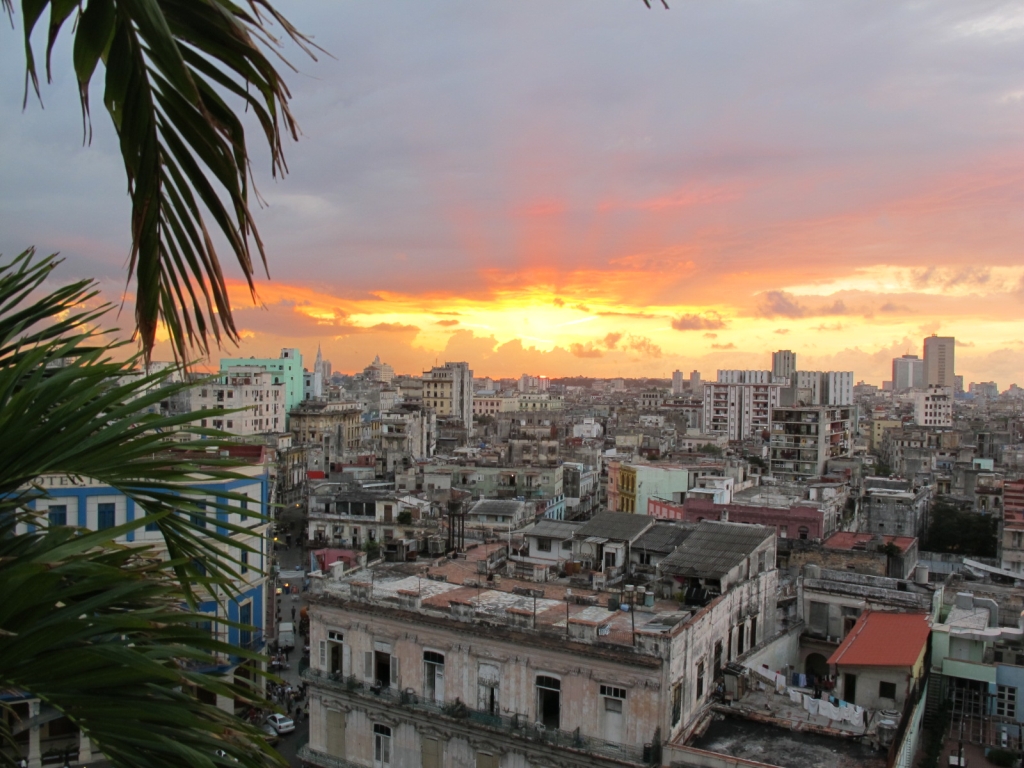
Havana
With term break around the corner ( although it's still winter break) a friend of mine and I have been thinking of traveling for a month since we will be off for the whole February.
The problem is our tastes concerning the destinations are not really the same. He prefers Asia while I like going to the US. Then we came up with South and middle America. He said he wanted to go for some time now but didn't speak any Spanish. Well I had two years of Spanish in school, but out of the five languages I “speak” I'm the worst at this one.. frankly I wouldn't even consider myself speaking that language although I was a straight A Spanish student in school. But whatever I'm sure you can cope there even without being a Spanish expert. So finally we ended up checking flights to the following destinations: Bolivia,Peru and Cuba.
While flights to Bolivia and Peru were found quickly, even if a little more expensive than we thought we couldn't find any to Cuba.
Every time I entered Havana or Varandero the search engine wouldn't recognize it.
I found this quite strange so I started to do a little research on the internet later when I got home. I thought maybe it was the smart phone and tried again on the computer, but still nothing. After googling for flights instead of looking for some directly on travel sites I found one airline flying into Havana.. yes only one.
I wanted to know why that is, I mean I know Cuba is quite isolated but since even grocery stores like Hofer offer trips there I thought they had quite the tourism. So I googled again and found some interesting things. While the lack of flights from Europe is explained by Cuba not really being a point of interest the one from the US had other reasons. While I had already heard that it was somewhat hard for US-citizens to go to Cuba I found out it was even more than that.
In 1960 President Eisenhower placed an Embargo against Cuba after the Cuban government had disowned Americans and American companies there for about a billion dollars. From there on it was prohibited to export any goods to Cuba except for medicine or food. Financial support of the regime in Havana was prohibited in any way and Bill Clinton even expanded the embargo by disallowing foreign subsidiaries of U.S. companies to trade with Cuba. What Clinton allowed though was the export of other American
products.
Now this Embargo also effects normal US citizens who want to travel there. While Cuba does not mind them coming there they are not allowed to go there by the US. The reason is that if you stay there for longer than a day it is only logic that you are going to spend money and support the government. This the reason you can't go there without a special license. Those license are available for Journalist, people who do academic research, people who do government business or visit their family there.
There are no such rules for Europeans although you should be careful with what you bring with you, for instance you should only bring one laptop, cell-phone and camera. It is prohibited to bring GPS-devices with you although it is tolerated if your cell-phone has GPS, and what I found most funny: You are not allowed to bring air conditioning.
While I found it quite interesting to learn these things I don't think I will be going to South or middle America this February and stick with my plan on going to Greece instead.
Even-though seeing Bolivia or Peru would sure be interesting I feel like I wouldn’t have enough time to plan that trip and I'm not sure I would feel safe there without planning ahead really well. Cuba on the other hand is out for me as for now because flights there are too expensive since I only found one single airline that would go there.

Sonntag, 29. Dezember 2013

Places on my list

Last time in English class we were ask to write at least two travel related blog posts over Christmas-break and it was suggested we should get creative and maybe blog about places we haven't been to yet and would like to visit. So this is what I' doing now, a list of places I really want to visit, of course it's just a small selection of them because the world is big and I love to travel but these are the top ones on my list:


Los Angeles and the rest of California

This is a trip I have been procrastinating for so long now.. The reason is that L.A. is somewhat intimidating and by that I mean transport. This city consists out of many towns who were merged together into the greater Los Angeles area. Also public transport is not developed very well and you definitely need a car if you go there. I wanna do the typical tourist things there, like Hollywood, the Getty Center, Venice beach, Griffith observatory and so on. Later on I also want to visit other places in California such as San Diego which is said to be the nicest city in the U.S. And drive up the coast-line to San Francisco.
Los Angeles


San Diego

Tehran

While what we mostly get about the Iranian Capital in the media is negative I believe there is more to it. I have been watching some documentaries about Tehran and this city somehow fascinates me. Not only I'm fascinated by Oriental culture and architecture Tehran also seems to be a modern vibrant City that is much more peaceful than it is presented to us in the West. I really wanna go there someday because it looks beautiful and exciting.


Tehran


Athens

I only have been to Athens once for some hours to see Syntagma Square and the Acropolis (I blogged about it in a previous post). Greece is one of my favorite countries to go in Europe. I like going to southern Europe in general and while western countries like Spain are just as beautiful, especially the south with the Arabic influenced architecture, the south east is what I like most. Athens is the biggest city in the Balkans that offers a lot of culture and history, seeing as Greece is such an important country historically. I'm actually just about to book a flight there.

Athens


Panama-City

I've heard a lots of great things about Panama from people who were there and the capital with it's impressive skyline is something I really wanna see someday.

Panama- City


Vlorë and Tiranë

I know Albania is usually not the place that comes to most people's minds when they think of a vacation but if we are honest most people don't know much about this country. But maybe this is going to change in some years. The country advertises itself as “a new Mediterranean love” and Europe's last hidden treasure. And especially the South has great touristic potential. What many people don't know is that the Albanian riviera is actually pretty nice. While the beaches in the North such as Durrës are overcrowded and not that good the ones in the south like in Vlorë and Dhërmi offer you white sand and bright blue water. Tirana on the other hand is just my personal interest because I'm learning the language am interested in the Balkans.
Beach in Vlorë

Tirana


Dubai

A place I also wanna see anytime soon to see this almost unrealistic splendid world

Dubai


Communication problems in the suburbs of Dublin

During our junior year my class and I went on a language trip to Ireland. We stayed there for two weeks,
Dun Laoghaire
which were 10 days in Dublin and the rest going to Galway a town on the west coast where we got to see some of the beautiful nature the Emerald Island has to offer, such as the Cliffs of Moher for example. We were all placed as a pair of two in host families in the Dublinian (in lack of a better adjective) suburb of Dun Laoghaire.
While Dun Laoghaire is a nice little town only 15 minutes away from Dublin by train it was a little bit boring, since all it had to offer was a small mall and a McDonald's which most of us went to to meet up. It didn't really matter though since our teachers made sure we were entertained most of the time. Before noon we had English classes at the local language school which I personally didn't find very helpful since we only learned stuff we had already done in school years before. After school our Austrian teacher would take us to Dublin for some sightseeing or hiking or the beach.
What I found most challenging about our stay there was the Irish English. I don't know if this applies for the rest of the town or if our host family was originally from Dublin but they sported a thick dialect that was almost unintelligible to me. While in America or England I never had problems, communication with them was kind of hard. There are some phrases of the things stuck in my memory because our host mother had to repeat them at least three times until I finally got it. For instance she always said “hosh” instead of “hot” and her question if we were going back out sounded something like “ ah yoush going back awt?”. While for the first few days you felt like a complete failure at English for having her repeat everything three times you get used to it and start figuring out what they were talking about. And this is what I would have liked to work on in that language school there. Dialect and differences to British and American English and also learn something about the Irish language Gaelic. Although we touched on the topic Gaelic language in one of our lessons I think the only thing we learned was “Pog mo thoin” which is kiss my ass and can be found on various t-shirts that they sell to tourists in Dublin. Dublin itself was a nice city, it reminded me a little of Graz just a little bigger. The only strange thing we saw there was that many people “walked” their children on a leash which was a bit disturbing but yeah.

Overall staying in Ireland was a fun challenge for my English as well as a great experience and although there are place more interesting for me personally I'm glad I got a chance to visit

Montag, 16. Dezember 2013

The Dutch Caribbean

Sunset at the Marriott beach resort
When hearing Caribbean most people might think of Islands like the Dominican Republic or Trinidad, small wonder since they are the most touristic ones and surely worth a visit. But touristic often comes with mass tourism which might ruins you picture of lying on an unspoiled beach in paradise. You might want to give the not so popular Islands a shot when you are visiting the next time, and let me tell you you don't have to go to over the top exclusive places like Mystique or St. Barths for the real Caribbean experience. Last year I visited Curacao a part of the so-called ABC Islands which consists of Aruba, Bonaire and Curacao and make the most Southern part of the Dutch Caribbean. Until October 2010 these three Islands were administered as Dutch territory within the former Netherlands Antilles, but since then it's a constituent country of the Kingdom of the Netherlands. They accept Dollars but you are better off if you pay in the local currency “Antilles gilders” because they charge you way more for dollars
So since this Island lies a little off the beaten track near the Venezuelan coast it's often forgotten but there lots advantages it has to offer, some of them being:

  • It's outside the Hurricane-belt so you don't have to worry about the weather.
  • It's easy to reach from Europe, Air Berlin has flights there every Tuesday and KLM also flies out frequently
  • It's less crowded than other Islands, most tourists come from the Netherlands or the US
  • It has it's own special Vegetation, a lot of parts of the Island are desert-like


    The biggest ethnic groups of the country are Afro-Caribbean people and Dutch due to it's connection to the Netherlands. Official languages is are Dutch, Papiamentu and English. Papiamentu is a Creole language and I found it to be very interesting since it's a mix of Dutch, Portuguese and Spanish. The people there are the nicest and will help you however they can. Like we once got lost by car and as we stopped to study the map a man stopped by and asked if we needed any help. We told him where we wanted to go and he drove all the way with us to show us. People will start having random conversions with you while you are waiting for your coffee at the coffee-shop which is a great way to get to know the culture and the service is excellent anyway. In my post about Rome I have been ranting about the worst hotel I've ever been, well the best so far was actually the Marriott Resort in Curacao which is the perfect choice for your stay there. It lies just 10 car-minutes away from the Capital, so it's not too secluded but still offers one of the nicest private beaches on the Island. I can only recommend.
Here I have summed up the tops things to do and see in Curacao:

  1. Blue-bay beach: This was without a doubt the most amazing beach. It lies within a gated community, but you can get in with an ID and a 7$ fee for the lounge chairs. This is just exactly how you imagine a beach in the Caribbean. White sand, crystal clear turquoise water and a lounge chair in the shadows of the palm trees.
    Blue-bay beach
  2. Willemstad: The Islands Capital looks a lot like Amsterdam just more colorful. It consists of the two parts Otrabanda and Punda which are divided by the natural harbor and connected via the Queen Emma bridge for pedestrians and the Queen Juliana bridge for cars.
    While Otrabanda offers you a range of art exhibitions and shops, Punda houses the market and those colorful houses that remind you of Amsterdam.

     
    Punda
    Art in Otrabanda

    Willemstadt by night

  3. Diner at the market: Willemstad is famous for it's floating market, a place where mongers, mainly from Venezuela sale their goods such as fish directly from their boats. There is also a big market hall where locals prepare traditional specialties on charcoal grills, a good possibility to get a delicious and authentic meal for reasonable prices.

  4. Curacao Sea-Aquarium: Good to go there with kids. Watch a walrus pull of a show, see the Dolphins doing ticks with their trainers or even pet a shark.

  5. Fishalicious: A small restaurant in Punda run by Dutch people. They offer the best seafood in town. It's a little pricey but worth it! One of the best restaurants I have been so far. Try their fish-soup
    Fishalicious Seafood and more

  6. Grote knip: The grote knip also called Playa Abou in Papiamentu which means “beach in the valley” lies in the North-west of the Island. The beach itself is not that great and even a little dirty. But the water there was the nicest and most turquoise. It's also good for snorkeling because there is a coral reef nearby.
    Grote Knip

  7. Curacao Liquor distillery: Yes the blue liquor gets it's name from this Island. The factory lies a little outside Willemstad and you can visit it to see how the liquor is produced, what it consists of and also learn it's history. Really fun!
    From fruit to liquor
Of course there are many more things to do and see in Curacao but these were my favorites. So all in one if you are looking for for an authentic Caribbean experience with nice people and delicious food as well as a relaxing vacation Curacao is the way to go. Oh and you shouldnt be afraid of this little guy, Iguanas are found all over the Island and some of them are not very shy ;)


Dienstag, 3. Dezember 2013

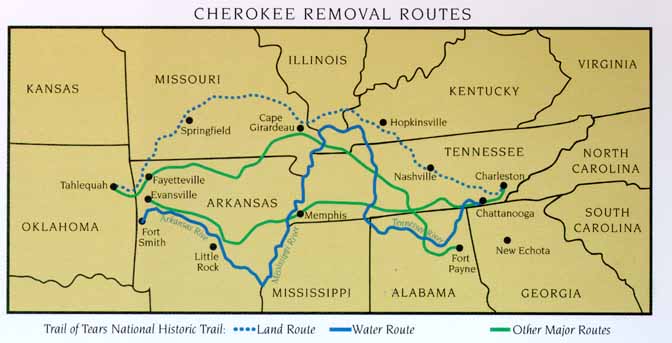
The Trail of tears

We are currently talking about American culture and history in English class and each one of us was assigned to prepare a topic and present it in class. I got a dark part of American history, the so called Trail of Tears and thought I would share this part of history with you.
Trail of tears refers to the Native American's journey to the West of Mississippi river as well as the act of the Native tribe's removal from the South East to today's Oklahoma in general. First policies to remove Indians from their land were developed in 1803 after the purchase of Louisiana (now they had the space to just send the Indians west) under President Jefferson as the white settlers desired their prosperous land to raise cotton on it. They also believed that Indians should be civilized, which meant converting them to Christianity and turning them into farmers.The Natives tried to assimilate themselves into the white people's culture to show them they were no savages in hopes that they would let them keep their land but 
in 1830 the Congress passed the “Indian Removal Act”
The new law allowed President Jackson to negotiate treaties with Native tribes under which they had to give up their land east of Mississippi river in exchange for land in the West.
Jackson tried to sell this as an act of grace the the public saying that this would allow to live Indians safe from white harassment and to govern themselves in peace. However in 1830 17.000 Cherokee people where forcibly removed from their homeland and approximately 6000 died on their way to Oklahoma.
The following years many other tribes got their own “Trail of tears” which made the term also a general reference for forced removals of Natives and ethnic cleansing all over the country


Greek food

So I decided to write about food in this post and share one of my favorite recipes with you.
My favorite cuisine has always been Greek. I love the spices they use and especially their casseroles like Moussaka and Pastizio. Last weekend I was craving Greek food and decided to try preparing some on my own. Since Moussaka was way to complicated and time consuming I went for the maybe most famous Greek dish; Souvlaki. First of all: No Souvlaki does NOT have to be served on a skewer. You grill it on one yes, and you can also serve it on one, but other than a lot of people here think it can also be served on a plate or in pita-bread and still be souvlaki, I like it best served in pita-bread with tomatoes, olives and feta. Preparing this dish is easy but you should plan ahead because it takes about two hours for the meat to suck in the marinade before you can grill it, so it's not really fast-food. Here is a recipe I found on the intrnet and always use:

Ingredients:

  • 1/4 cup olive oil
  • 1/4 cup red wine
  • 2 tbsp. fresh lemon juice
  • 1 tbsp. dried mint
  • 1 tbsp. dried oregano
  • 4 cloves of garlic, smashed and minced finely
  • 1 bay leaf, crumbled into tiny pieces
  • 1 lb. pork shoulder, trimmed of fat and cut into 1 ¼ inch cubes
  • Salt and freshly ground black pepper
  • Lemon (for serving)

Preparation:

In a large non-reactive bowl, whisk the marinade ingredients together. Add the pork cubes, cover with plastic wrap and refrigerate for 2 to 3 hours.
If using wooden skewers, soak these in a shallow pan filled with water while the meat marinates.
Heat the grill to medium high. Thread the meat on to the skewers (about 6-7 pieces per skewer). Season the pork with salt and freshly ground black pepper.
Grill over medium high heat for about 10 minutes, turning occasionally until they are cooked through. Squeeze some fresh lemon juice on the skewers before serving or remove the meat from the skewers and serve it in a pita along with tomatoes, feta, olives and french fries.

Sonntag, 24. November 2013

New Immigration law leaves the fields emtpy

So today I'm posting about a political issue again, this time in the US. In my English class we were assigned to transcribe a video about American culture. The video I got was about a new Immigration law in the State of Alabama. This new law toughens the rules about social intercourse with undocumented Immigrants as you will hear in the video. What was funny though: As the law was introduced most Immigrants fled to another state and no one was there to work on the fields because Americans didn't want to do it. So it is true Immigrants documented or not are a backbone of the economy and also what makes the US. And if we are all honest to ourselves there are also many jobs that a lot of people here in Austria consider themselves to be too good for too. But it's work that has to be done! So the next time someone whines about Immigrants taking away jobs from us they might want to think about that!
Down here you can see the transcript of the video. There is one part missing tho, because I really could not understand what the second man they interviewed was saying sorry! Also I only did the first part but you can find the second on my classmate Hannah's blog here Hannah's blog


Anchor:Five states have now enacted strict immigration laws, Arizona began to upper last year but since that Utah, Indiana, Georgia and now Alabama have joined the ranks. And It turns out that they are already feeling the pitch. See last week we told you about the Hispanic populations were fleeing from Georgia before this law goes into effect on July 1st. And farmers instantly found themselves without a work force to pick their crops. (They switch over to a field where a worker comments on the new law)

Hispanic field worker: “ Some of us is going to be on the field, going to spoil. Some people is going to lose a lot of money.

Anchor: Well now Alabama who's law is said to be the strictest in the Nation,they are expecting the same thing.

Speaker: Gathering the things we like on our diner is hot, hard work and somebody has to do it.
Man: Sometimes it's difficult to find local uh folks that are willing to do the some of these jobs.
Speaker: That's what we've found at about half a dozen south Baldwin farms, Immigrant... (switches over to anchor again)

Anchor:Alabama's law criminalizes not only employing undocumented immigrants but also assisting them, providing transportation or housing and renting. But the farms may not be Alabama’s only problem as reconstruction efforts are much needed after tornadoes tore through Tuscaloosa just weeks ago.And out of the kids of this bill said it's meant to put Alabamians back to work but really do that work. Or does this once again show that undocumented immigrants are a backbone of this economy. Here to discuss this with me is immigration attorney Eleanor Pelta with Morgan Lewis and Bockius law firm Thanks so much for being here tonight Eleanor

Pelta: You are welcome

Anchor: So you and I have spoke about some of theses laws before when it first popped up in Arizona and of course there was a lot of debate around the country a lot of people were angry there was a.. you know lot opinions that this is a prejudice law
But now it seems like that fear has actually turned into an action and that populations are fleeing these states, did you expect that to happen?

Pelta: Well I'm not surprised to see it happen particularly in Alabama. Alabama is like Arizona on steroids umm you don't have to look very far to see the venom in that particular law. Umm The law uh prohibits citizens from helping other citizens if they uh reasonably should've known that the other citizens of the state where uh undocumented umm the law requires public officials to report on school children who they think might be illegal, it really is a very vicious piece of legislation.

Anchor:That what I mean it goes is far beyond uh, trying to bring jobs back to Americans and dealing with you know what you could say with what is the undocumented Immigrant problem but the fact that.. that's just inhumane especially in areas like this where are just so many natural
Disasters you can't assist somebody if they might be undocumented

Pelta: I..That's exactly right and I think that what the Alabama law shows is that this is really a civil rights issue it is.. it is not just an immigrants rights issue. It's an issue that has to do with.. uh preserving human rights and human dignity umm I think that's really the Alabama law stripped bare.

Anchor: Well uh otherwise its sounds like it is telling you to let the person just lay there and allow them to die, it's horrible.

Pelta: And his wife and children

Anchor: where are these people going going instead they are fleeing from Georgia they're fleeing from Alabama just other nearby state that haven't enacted any of these measures?

Pelta:Well its hard to know where they're going but I don.. I don't believe that they're going home on Umm they're really just retreating further into the shadows which really doesn't help anyone it doesn't help our economy, it doesn't help us raise wages , it doesn't help people come out of the shadows and pay taxes and contribute to the economy and it really just shows the problem with this kind of state patchwork of laws umm if you have one state in enact one law and another sate enact a different law you are going to have people move from state to state instead of having one unified balance to approach that really kind of deals with the problem in comprehensive way